A Diplomat's Path: The Story of Murad Hofmann
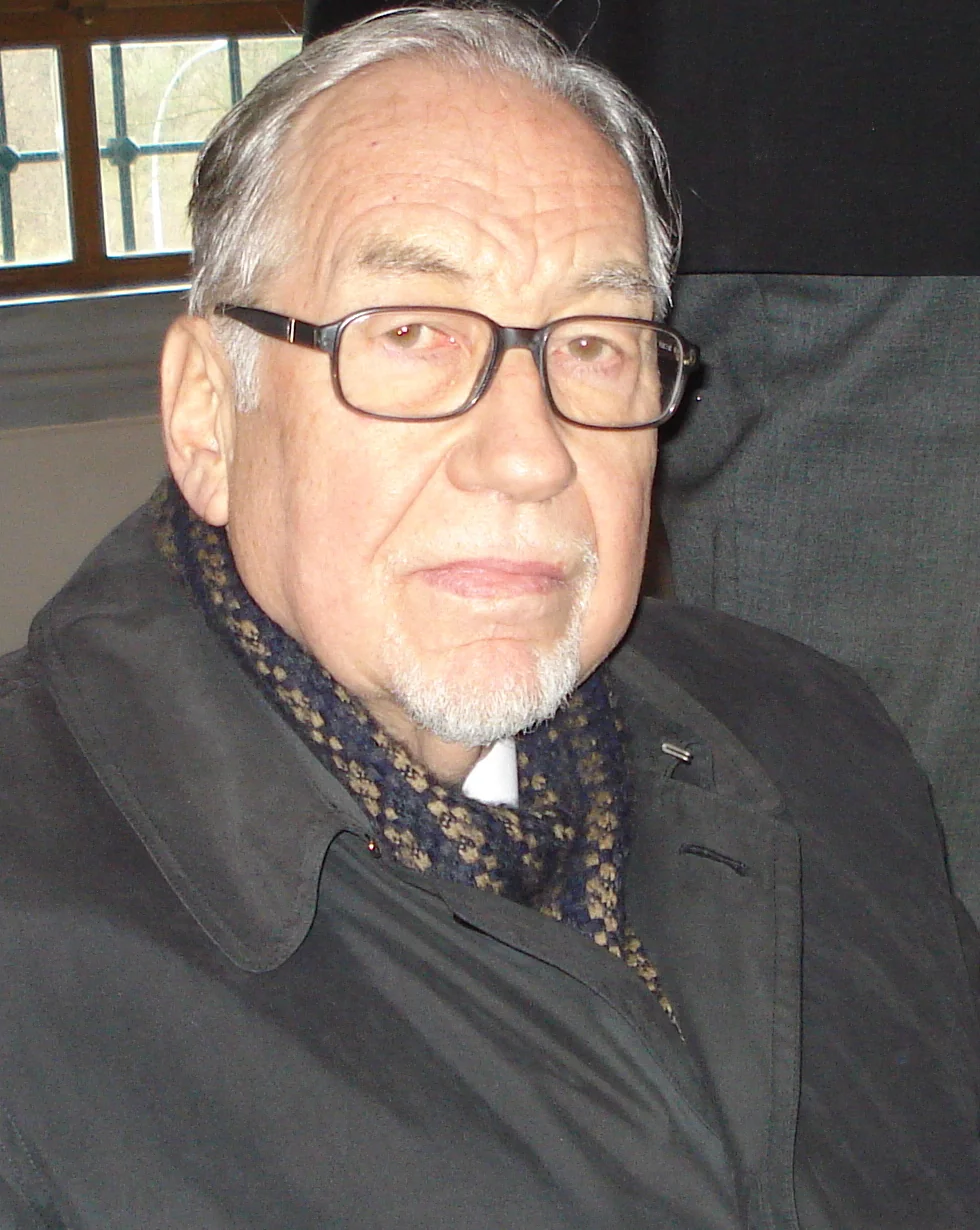
Murad Wilfried Hofmann
49 years old, from Germany
Previous Religion: Catholicism
My Life Before Islam
Murad Wilfried Hofmann was born on July 6, 1931, in Aschaffenburg, Germany, into a Catholic family of intellectual standing. He studied law, earned a doctorate in Munich, and completed a master's degree at Harvard Law School before joining the German Foreign Service in 1961, where he rose through the ranks of a demanding and elite profession. In the early 1960s he was posted to Algeria, where he witnessed the war for independence and was deeply impressed by the character of the Algerian people. He was struck by the discipline, dignity, and faith of ordinary Muslims, and he began reading the Qur'an to understand what gave them such strength.
The Moment of Guidance
Hofmann later said that the Qur'an and his experience of Muslim life spoke to questions that his Catholic upbringing and Western philosophy had left unanswered. He was drawn especially to the Islamic emphasis on the unity and transcendence of God, which he found more convincing than the complexities of the Christian theology he had studied. His admiration for Islamic art and his observation of Muslim practice grew into conviction, and he was also deeply affected by what he saw of injustice during the Algerian war. For his son's coming of age in 1980, Hofmann wrote down everything he truly believed, and when a Muslim scholar read it and told him that whoever believes this is a Muslim, Hofmann realized where his journey had arrived.
Reflections
On September 25, 1980, Murad Wilfried Hofmann declared his faith and embraced Islam, taking the name Murad. His conversion caused a stir because of his senior position in the German Foreign Service, but he continued his career, serving as Director of Information for NATO in Brussels and later as ambassador to Algeria and to Morocco. He performed the umrah pilgrimage in 1982 and the hajj in 1992. He later wrote that the moment he submitted to Allah was not a rejection of his past but the completion of a search that had occupied his mind for years, and he preferred to call himself a German Muslim rather than a convert.
Murad Hofmann became one of the best-known Muslim intellectuals in Europe, writing books that explained Islam to the West with insight and warmth. His "Diary of a German Muslim" appeared in several languages, while his "Islam: The Alternative" argued that Islam offers a coherent answer to the spiritual emptiness of modern materialism and his "Journey to Makkah" described his experiences of the pilgrimage. He was a signatory of the open letter "A Common Word", addressed to Christian leaders, calling for mutual understanding. He died on January 12, 2020, and is remembered as a bridge between two worlds: a German diplomat of the old school and a devoted servant of Islam.